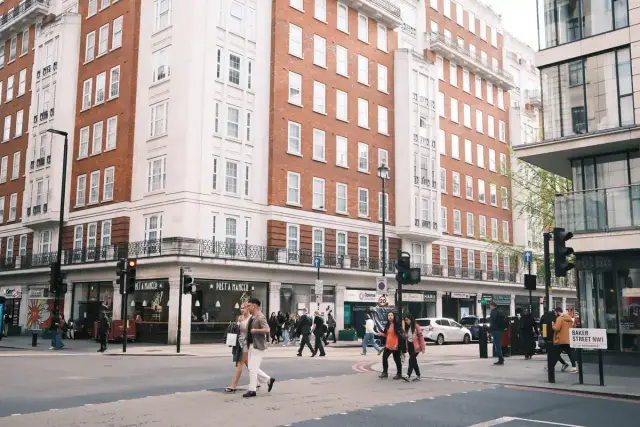
Offices · Retail · Mixed-Use · Industrial
Commercial Bridging Loans
Commercial bridging finance funds the purchase, refurbishment, or refinance of commercial property when high-street lenders can't move at the speed the deal requires. We bridge offices, retail, mixed-use, industrial, hotels, and semi-commercial assets across the UK — for investors completing on opportunity buys, landlords repositioning vacant stock, and businesses securing their own premises before long-term finance is in place.
£200k–£100m+
Loan Size
12 to 24 months
Typical Term
some lenders go to 36 months
Up to 75% LTV
Typical LTV
Key Features
What We Offer
Offices, retail, mixed-use, industrial
Full commercial spectrum — flats above shops, ground-floor retail with residential above, hotels, semi-commercial, light industrial, owner-occupier business premises.
Typically 5–7 working days
Senior commercial bridge typically completes in 5–7 working days from clean instruction. Auction commercial buys complete inside the completion clock, typically 20 business days.
Vacant-to-let repositioning funded
Purchase plus light refurbishment in one facility. Works budget held in retention, drawdown against monitoring-surveyor milestones. Exit on commercial mortgage once let.
Owner-occupier business buys
Bridge your trading premises before long-term commercial mortgage is in place. Refinance to term once trading or letting income is established.
Refinance + capital release
Equity from existing commercial property for further investment, working capital, or cross-collateralised portfolio expansion.
Down-valuations & delayed sales
Commercial lender slowed your deal, or the sale funding it has stalled? Bridge while they catch up — or take the deal off-piste entirely if their underwriting won't complete in time.
Ideal For
Common Scenarios
Property investors completing quickly
Senior bridge to 75% LTV, typically completing in 5–7 working days. The product investors reach for when the high-street can't move fast enough.
Auction commercial buyers
A dedicated workflow for the completion clock (typically 20 business days), panel of specialist commercial surveyors ready to instruct fast.
Owner-occupier businesses
Buy your trading premises with a senior bridge, refinance to commercial mortgage once trading-account or letting evidence is established.
Refurb / repositioning specialists
Fund the purchase plus light works in retention; drawdown as the surveyor signs off completed milestones.
Operators with strong covenant, slow-moving lender
Bridge while the high-street processes. Common when your existing banking relationship is happy in principle but operationally slow.
What We Fund
Commercial Bridging — The Specifics
- •Commercial purchases at speed — completions typically in 5–7 working days, pre-approval available before exchange
- •Auction commercial buys — our typical timeline sits well inside the auction completion period (typically 20 business days)
- •Vacant-to-let repositioning — fund the purchase plus light refurbishment, exit on commercial mortgage once let
- •Mixed-use and semi-commercial — flats above shops, ground-floor retail with residential above, live-work units
- •Owner-occupier business premises — buy your trading premises before long-term commercial mortgage is in place
- •Refinance + capital release — equity from existing commercial property for further investment or working capital
- •Down-valuations and delayed sales — bridge a commercial or investment transaction the term lender just slowed down, or one waiting on the sale of another asset
Property Types
Commercial Property Types We Finance
Lender appetite varies significantly by asset class. Here is how bridging underwriters typically assess each type when you are arranging commercial property bridging finance.
Retail Units
High-street shops, shopping-centre units, and parade retail. Lenders look at lease length, tenant covenant, and town-centre footfall. Vacant retail is lendable on a commercial bridging loan but the exit — letting or conversion — needs to be credible. Secondary towns attract more scrutiny than prime high-street locations.
Offices
From single-floor suites to multi-storey office buildings. Lender appetite concentrates on Grade A or recently refurbished stock; older secondary offices require a clear repositioning plan. Owner-occupier purchases — where a business secures its trading premises via a bridging loan for commercial property UK — are a strong and well-supported use case.
Mixed-Use
Flats above shops, ground-floor commercial with upper-floor residential, live-work units, and converted townhouses with a commercial consent. Lenders assess the commercial proportion of value; where residential dominates, the loan can occasionally be structured closer to residential bridging parameters. Planning status and any required change-of-use consent is scrutinised.
Warehouses & Industrial
Light industrial units, trade-counter premises, logistics sheds, and multi-let industrial estates. Industrial is generally well-regarded by bridging lenders — strong occupier demand, relatively straightforward valuation, and clear exits onto commercial mortgages. Specialist uses such as food production or chemical storage may require a specialist lender, and we work with several.
HMO as Commercial
Large HMOs (typically 7+ beds, or in Article 4 direction areas) are increasingly assessed on a commercial basis — valued on income yield rather than bricks-and-mortar. This affects the LTV calculation on your commercial bridging loan. A licence on its own doesn’t prove the use is lawful in planning terms; see HMO licence vs planning permission. We work with lenders who understand HMO valuations and can price the risk appropriately, particularly for portfolio landlords expanding their commercial position.
Mixed-Use
Mixed-Use and Semi-Commercial Bridging: How the Loan Is Sized
The lender looks at how much of the building’s value is residential, which valuation basis the valuer uses, and whether the leases back up the rents. Each can move the loan amount more than the rate does.
Does the residential share change the LTV?
Often, yes. Lenders classify a mixed-use building by the share of its value (or floor area) that is residential, and each lender sets its own threshold. Above it, some treat the loan more like residential bridging; below it, as commercial. There is no single “more than half” rule, so ask which basis and which threshold the lender uses before you rely on a figure.
Vacant possession or investment value?
Investment value reflects the rent and leases in place. Vacant possession (VP) value assumes the building is empty. On semi-commercial property, lenders often lend on the VP value, or on the lower of the two, which can cut the loan if the leases are what make the building valuable. More on how each type of report works in valuation types explained.
Leases, rent roll and schedule of accommodation
Before the valuation pack goes out:
- reconcile the rent roll to the signed leases (the rent passing, not the asking rent);
- list each unit’s use and floor area in a schedule of accommodation, because the valuer checks the residential/commercial split against it;
- have your solicitor review lease length, breaks and rent reviews (leases granted for more than seven years have to be registered at HM Land Registry);
- check whether signed new leases are a condition of your exit lender as well as the bridge, and map who can deliver them (exit strategies explained).
The full list of what to have ready is on our pre-application checklist.
If you or your family will live in one of the flats
Then the loan may be regulated, and we don’t arrange it. We only arrange lending for business or investment purposes, never on a home you or your family live in; regulated vs unregulated bridging explains where the line sits.
Worked example: one building, two values
Illustrative example. The figures are invented to show the mechanics. This is not a real deal and not an offer of terms.
A company refinances a mixed-use building it already owns, a ground-floor gym, two floors of offices and three flats, with a £2.5m bridge. The investment value, with the gym and office leases in place, is £3.8m. The vacant possession value is £3.2m, and the flats are about 45% of it.
- The same £2.5m loan is 66% of the investment value, but 78% of the VP value.
- If the lender lends on VP and caps the loan at this page’s “up to 75%”, the maximum is £2.4m (75% of £3.2m): £100k short.
- The options: £100k more equity, a lender that uses investment value for this building, or extra security.
What helps the valuer: a rent roll that matches the leases, a schedule of accommodation that shows the residential share accurately, and leases reviewed by the solicitor before the valuer sees them.
Last reviewed: 18 October 2026
How It Works
From Enquiry to Drawdown
Initial enquiry
Property details, purchase price, exit plan. We do a soft credit footprint at this stage only.
Indicative terms
Same day. Soft credit only, no fee. A DIP letter your solicitor can rely on.
Valuation
RICS commercial surveyor instructed; typically 5–7 working days for routine commercial property. Buying at a discount? See how lenders treat below-market-value commercial purchases.
Legals
Your solicitor and ours work in parallel. Auction packs and unregistered land take longer; clean leasehold/freehold commercial is fast.
Drawdown
Typically 5–7 working days for clean deals. Funds released to your solicitor on completion.
Loan Parameters
Headline Numbers
Loan size
£200k–£100m+
LTV
Up to 75% (tighter than residential)
Rates
Bridging rates start from 0.50% a month (first charge, under 50% loan-to-value, straightforward cases)
Charges
1st and 2nd charge available
Term
12 to 24 months; some lenders go to 36 months
Property types
Commercial, mixed-use and semi-commercial; each case considered on its merits
Worked Example
A £500,000 Commercial Bridge Over 9 Months
A representative example of how a commercial bridging loan works in practice for a UK property investor.
Scenario: Retail unit purchase for vacant-to-let repositioning
Loan
£500,000
Term
9 months
Rate (published average)
0.88% a month
Interest, rolled up
£39,600
Arrangement fee (1%; lender fees typically 1–2%)
£5,000
Valuation
£2,500
Legal fees
£4,000
Our fee (1%)
£5,000
Total cost
£56,100
Exit strategy
Refinance onto commercial mortgage once let
How the costs work: Interest is rolled up into the facility and repaid in full at exit alongside the capital — no monthly outgoings during the 9-month term. On these figures the total cost is £56,100: £39,600 interest (£500,000 × 0.88% × 9) plus £5,000 arrangement fee, £2,500 valuation, £4,000 legals and our £5,000 fee. The 0.88% rate is the average published rate for commercial bridge across 18 lenders, as at 25 October 2026; this is a published market figure, not a quote for your deal. Today's bridging rates start from 0.50% a month (first charge, under 50% loan-to-value, straightforward cases), development exit is priced case by case, and your actual costs are confirmed at indicative terms stage before you proceed. Your solicitor and ours work in parallel; typical completion is 5–7 working days.
What the lender assesses: Asset quality and location, exit credibility (does the property support a commercial mortgage once let?), and borrower track record. Trading history is not required — the bridge focuses on the property and the plan, not the business balance sheet.
Representative example only. Actual loan size, LTV, and total costs confirmed at indicative terms stage. Arrange a call to discuss your specific deal.
Common Questions
Commercial Bridging FAQ
What's the maximum LTV on commercial bridging?
Do you fund commercial property at auction?
Can you fund refurbishment alongside the purchase?
Will you lend on vacant commercial property?
How is commercial bridging different from a commercial mortgage?
What is a bridge loan in commercial banking?
What LTV can I get on a commercial bridging loan?
Is a commercial bridging loan regulated?
What's the difference between commercial and residential bridging rates?
Can I get a bridging loan for a mixed-use property?
Real Results
Deals We've Structured
Ready to Discuss Your Deal?
Get an indicative quote or arrange a call with a specialist. If we can respond immediately we will, otherwise we'll call you back the same working day, often within a couple of hours.